 |
| Myotis myotis © Jasja Dekker |
The EEA report on bats is the most comprehensive study yet made of European bat population trends, studying 16 of the 45 bat species found across the continent. The study is the first to compile data from ten existing monitoring schemes in nine countries, building a prototype European-scale indicator of bat population trends. Surveyors counted and catalogued bats hibernating at 6 000 sites in nine different countries. Overall these species appear to have increased by 43 % at hibernation sites between 1993 and 2011, with a relatively stable trend since 2003.
“It is extremely encouraging to see bat populations increasing after massive historic declines,” EEA Executive Director Hans Bruyninckx said. “It suggests that targeted conservation policies over the last years have been successful. But many bat species are still endangered, so preserving their habitats is still an important priority. Monitoring bats also helps understand changes in wider ecosystems, including climate change, as they are highly sensitive to environmental change.”
European bat populations had previously declined significantly, particularly during the second half of the 20th century, largely due to intensifying agriculture, changes in land use, intentional killing and destruction of roosts. Bat numbers have also fallen as their habitats have shrunk, fragmented and degraded. Additionally, they have been poisoned by timber‑treatment toxic chemicals such as dieldrin, used in roofs.
Bats tend to be long‑lived animals with a slow rate of reproduction, so environmental or human pressures can cause populations to decline very rapidly, and they tend to recover slowly. For these reasons bats should still be considered vulnerable, the report notes. While signs of increase are positive, conservationists consider that current populations are still likely to be smaller than they were before they declined.
The report brings together for the first time data from, Latvia, Hungary, the Netherlands, Austria, Portugal, Slovenia, Slovakia, the United Kingdom and the German states Bavaria and Thuringia. The prototype indicator should be interpreted cautiously at this stage, as many species and countries are yet to be represented. It is hoped that this report will lay the groundwork for an even more comprehensive study in coming years, as bats are widely monitored across Europe.
Most of the species studied seem to be increasing or stable in number. Eight bat species increased moderately, including Daubenton's bat (
Myotis daubentonii). The Whiskered bat and Brandt’s bat (
Myotis mystacinus / brandtii) are so difficult to tell apart that they are counted together. These were the only species to register a strong increase in numbers between 1993 and 2011, according to the survey. Three were stable, two species were uncertain and only the Grey long-eared bat (
Plecotus austriacus) declined, albeit moderately. Nonetheless, many of these species are still rare and vulnerable.
The report states that the apparent population increase of most species may reflect the impact of national and European conservation legislation, species and site protection, targeted conservation measures and widespread awareness‑raising, particularly under the
EUROBATS agreement.
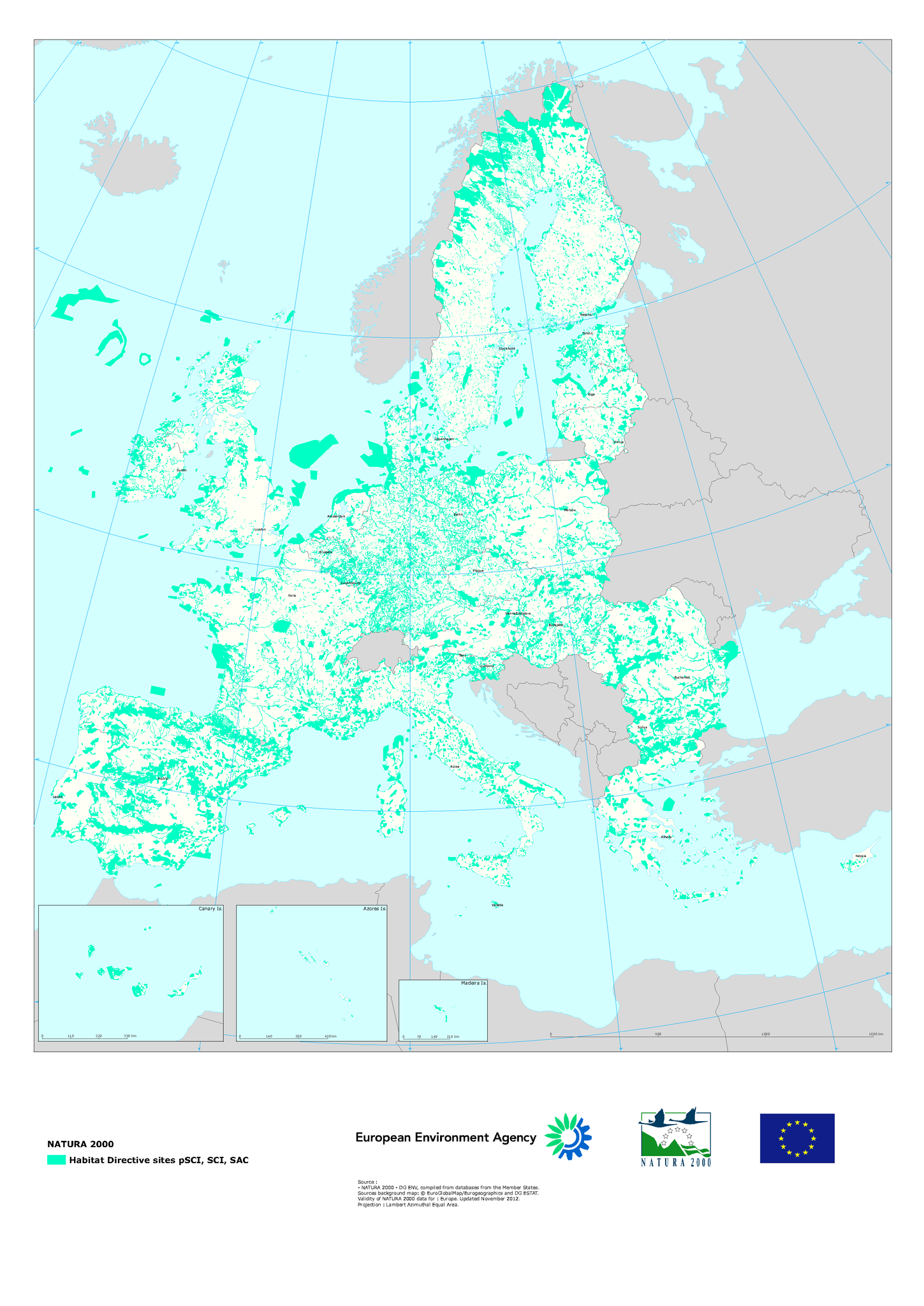
Europe’s wildlife is under pressure in many parts of Europe - only 17 % of habitats and 17 % of more than 1 000 animal and plant species assessed under the
Habitats Directive (Art.17) have favourable conservation status.
The Bat Conservation Trust (BCT), the Dutch Mammal Society (DMS) and Statistics Netherlands (SN) were key members of the project team behind the EEA report. Other organisations that contributed data and helped to develop the indicator included national bat and nature conservation NGOs, governmental organisations and individuals.
In addition, thousands of volunteer surveyors helped collect the data used.
The EEA report on bats uses a similar methodology to a recent report detailing the
dramatic decline of grassland butterflies in Europe. Numbers of these insects almost halved between 1990 and 2011 due to intensifying agriculture and a failure to properly manage grassland ecosystems, the report found.
Source:
European Environment Agency



 Los colores elegidos muestran el color de la naturaleza en sus diferentes estaciones. La información adopta junto con la naturaleza sus momentos de actualidad. Los tonos amarillos, marrones y verdes reflejan lo que vemos en la naturaleza, principios de Forestry News, ser fiel a lo que pasa en nuestro alrededor.
